Luxor is often called the world’s greatest open-air museum, and this 2 day Luxor itinerary shows you why. Set on the Nile in southern Egypt, the city holds the Valley of the Kings, the towering columns of Karnak Temple, and some of ancient Egypt’s best-preserved monuments. This guide covers the highlights on both banks of the river, plus when to go, where to stay, and whether you need a tour.
Trevorocity is reader-supported. When you buy through links on this site, we may earn an affiliate commission.
When Is the Best Time to Visit Luxor
You can visit Luxor year-round, but the desert climate can be extreme. I recommend winter or spring, when it’s cooler. Winter temperatures are moderate, around 68–77°F (20–25°C), with cooler but comfortable nights. In spring the heat starts to climb, ranging from 77–95°F (25–35°C). At that point, do your outdoor sightseeing early in the morning or late in the afternoon. I visited in March and the weather was perfect. Summer and fall can make outdoor sightseeing miserable, so if you visit then, bring plenty of water and sunscreen.
Visiting Luxor during Ramadan
Don’t let Ramadan put you off on visiting Luxor, honestly I would encourage visiting during this period. The experience doesn’t change much. You may notice short breaks in the evening after sunset, when people can eat and drink again, but many places understand that not everyone observes Ramadan, and it’s easy to find restaurants open for lunch.
How Many Days Do You Need in Luxor?
This 2 day Luxor itinerary covers the major highlights, but it’s a tight, busy schedule. Luxor is spread out, so getting between attractions takes time. Most flights out of Luxor also leave early, so it’s best to plan two full days on the ground. If you want a slower pace or more sights, add a few extra days. Many of the area’s attractions can also be visited on day trips from Aswan.
Do You Need a Tour to Visit Luxor?
No. Tours aren’t required for the major attractions in Luxor. Still, booking a tour is helpful because your guide also serves as your driver, which matters on the West Bank where sites are far apart. I took a few tours on my trip, and you don’t need the same guide every day
Do your research on what you want to see, then reach out to a guide. Tip: Guides sometimes take visitors to shops selling papyrus, perfume, and similar items. If you don’t want to stop, just say so up front. I told my guide I had no intention of buying anything and he had no problem skipping them. For more on this, read my guide to avoiding tourist scams in Egypt.
Where to Stay in Luxor
Luxor has accommodation at every price point, from high-end hotels on the Nile to inexpensive hostels. There is no shortage of hotels, so while planning in advance helps don’t worry on last minute bookings.
Luxury Hotels in Luxor
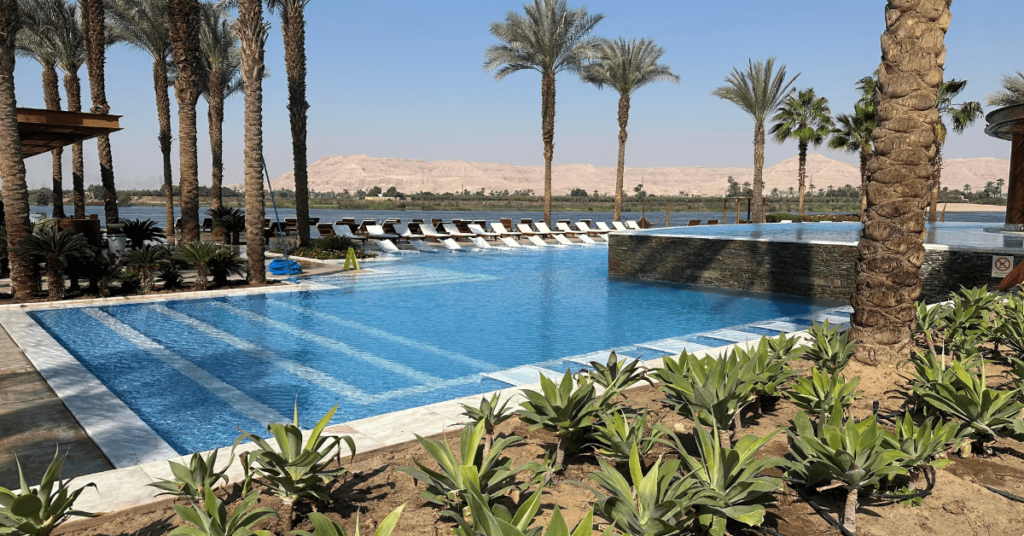
The 19th-century Sofitel Winter Palace Luxor is an icon, known for its opulent colonial-style architecture. The Hilton Luxor Resort & Spa offers a more contemporary style and an infinity pool overlooking the river. Both are ideal for unwinding after a long day of sightseeing. Keep an eye out for the Four Seasons Luxor when that is finished.
Mid-Range Hotels in Luxor
Steigenberger Nile Palace Luxor has spacious rooms, a large pool, and a prime spot by the Nile, a short distance from the main attractions. Pavilion Winter Luxor, next to Luxor Temple, offers a serene atmosphere and beautiful gardens.
Budget Hotels in Luxor
Budget travelers can choose from clean, basic options. The Nile Hotel is near the city center with Nile views, and Emilio Hotel is known for friendly staff and a location close to Luxor’s main sights. There are also plenty of hostels to choose from.
2 Day Luxor Itinerary at a Glance
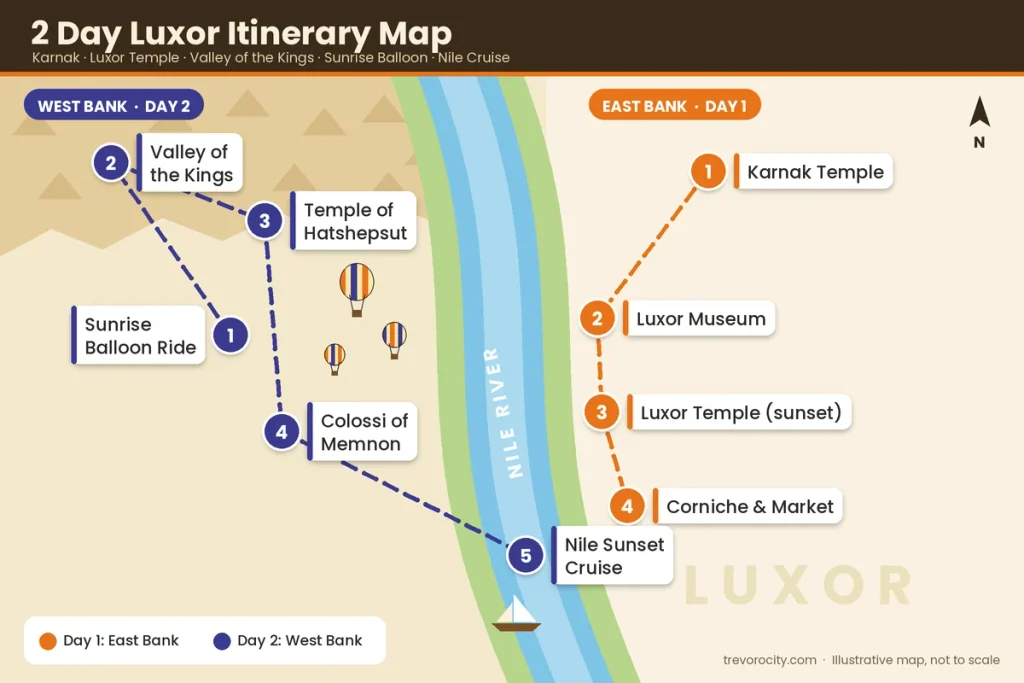
| Day 1: Karnak Temple (morning) → Luxor Museum (afternoon) → Luxor Temple (sunset) → Nile Corniche and market |
| Day 2: Sunrise hot air balloon → Valley of the Kings → Temple of Hatshepsut → Colossi of Memnon → Nile sunset cruise |
Day 1 of Your Luxor Itinerary: The East Bank
The East Bank is the “city of the living,” where the sun rises, and it holds Luxor’s two great temple complexes.
Karnak Temple
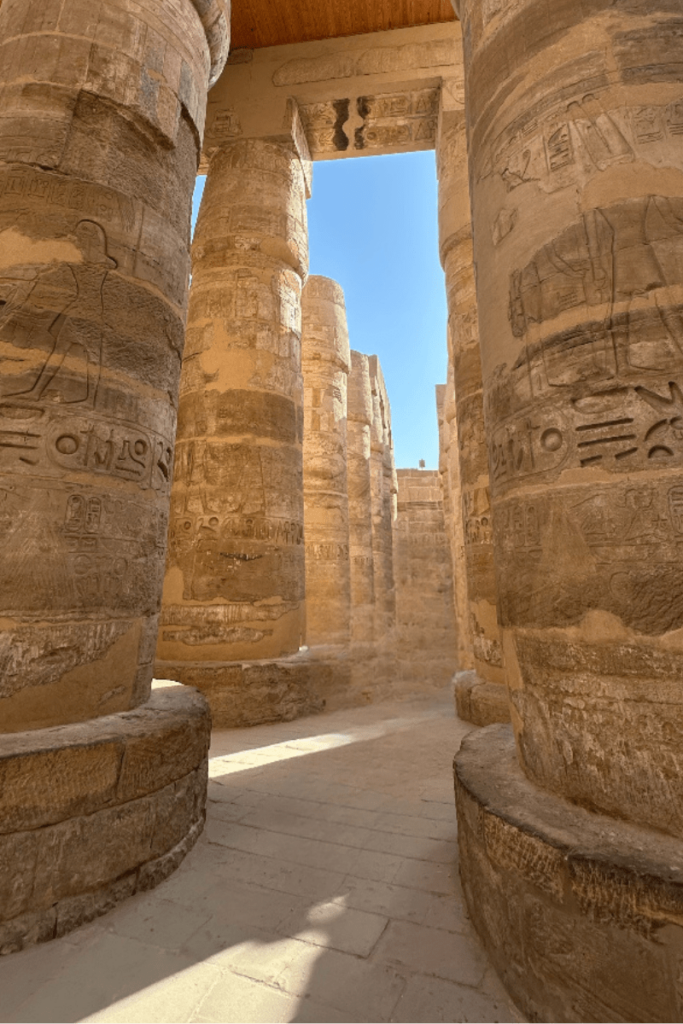
Karnak Temple is one of the largest and most impressive religious complexes in Egypt. Dedicated to the god Amun, it took over 2,000 years to complete. Walk through the massive hypostyle hall, with its 134 towering columns, and you’ll feel like you’ve stepped back in time. The complex also includes smaller shrines, sacred lakes, and stunning statues, making it an essential stop on any Luxor itinerary. Arrive early to beat both the crowds and the heat.
Luxor Museum
Luxor Museum is smaller than Egypt’s other big museums, but it has an excellent collection of statues, mummies, and the famous statues of Akhenaten. It’s a good air-conditioned break in the middle of the day.
Luxor Temple at Sunset
Luxor Temple sits in the heart of the city and was built by Amenhotep III and Ramses II. It’s especially magical at sunset, when golden light bathes the stone walls. The entrance is flanked by massive statues of Ramses II, and the central courtyard features a beautiful obelisk. Take your time, because the carvings tell the stories of the pharaohs.
Evening Walk Along the Nile Corniche and Luxor Market
Close out your day with a leisurely walk along the Nile Corniche, or stop by the Luxor market for last-minute souvenirs and a glimpse of local life. You’ll find colorful textiles, spices, jewelry, and trinkets to take home.
Day 2 of Your Luxor Itinerary: The West Bank
The West Bank is the “city of the dead,” where the sun sets, and it’s home to the royal tombs and mortuary temples.
Sunrise Hot Air Balloon Ride Over the Valley of the Kings
Set your alarm for 3:30 am, because the day starts with a sunrise hot air balloon ride over the West Bank. The views are breathtaking. Strong winds can cause cancellations, though. If you’re staying extra days, the operator will offer to reschedule. If it’s canceled and you can’t stay, you’ll get a refund. That’s what happened to me. Head back to your hotel for breakfast before the next stop.
Valley of the Kings
This is where many of Egypt’s pharaohs were buried, including Tutankhamun. The rock-cut tombs are adorned with vivid scenes from Egyptian mythology. Make sure to visit the tombs of Ramses VI and Seti I, and of course Tutankhamun’s tomb. It’s small, but it’s worth the visit for its connection to Howard Carter’s 1920s discovery, even though much of the treasure is now displayed in Cairo. Some tombs need a separate ticket, so check current pricing before you go.
Temple of Hatshepsut
Built into the cliffs at Deir el-Bahari, this temple honors one of ancient Egypt’s few female pharaohs and is known for its grand terraces and colonnades. The setting and design make it one of the most photogenic places in Luxor.
Colossi of Memnon
Two massive stone statues once guarded the entrance to Amenhotep III’s temple. The temple no longer stands, but each statue rises over 18 meters. It’s a quick roadside stop, and a good one on the way back to the river.
Nile Sunset Cruise
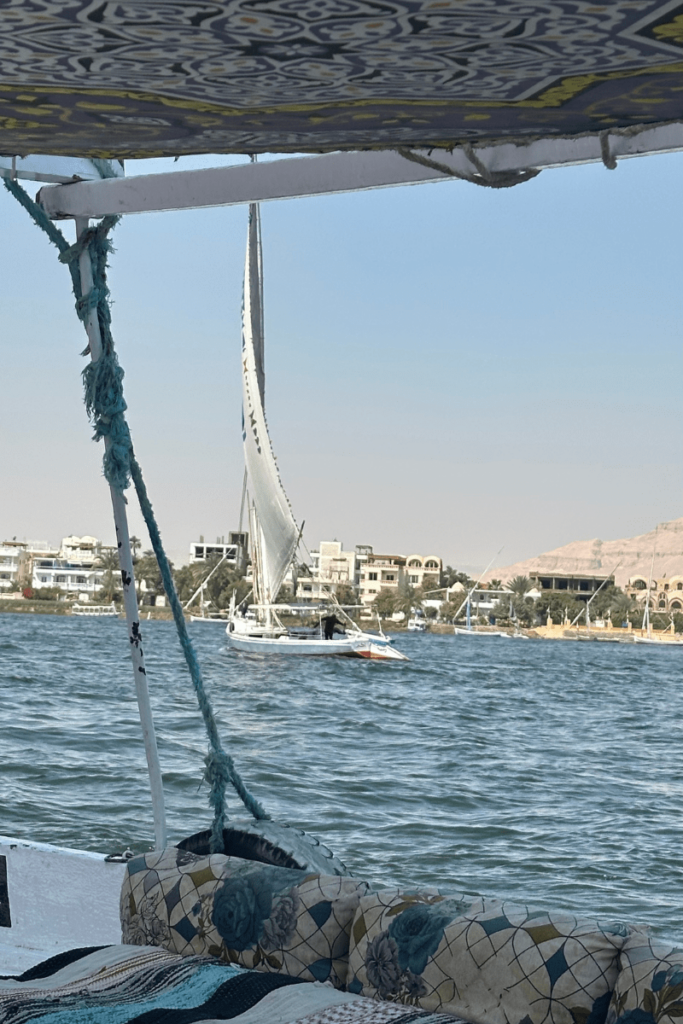
Wind down in the late afternoon with a Nile sunset cruise. Watching the sun dip behind the West Bank mountains and ancient ruins is unforgettable. Skip Banana Island if a boat operator offers it. It’s nothing more than a few animal cages and banana trees.
Final Thoughts
Luxor was one of my favorite cities in Egypt, and I’d happily return for more time. Going in March was ideal because most of the activities are outdoors and avoiding the heat is essential. I hope this 2 day Luxor itinerary helps you plan your trip.