
Not sure whether to fly Jeju Air? Here’s my full, honest review. Jeju Air is a South Korean low-cost carrier flying mostly domestic routes, with some international destinations as well. The fleet is primarily Boeing 737-800s, with some 737 MAX 8s in the mix.
One unique detail: Jeju Air is part of Value Alliance, a low-cost carrier alliance made up of five airlines — Cebu Pacific, Cebgo, Jeju Air, Nok Air, and Scoot.
Trevorocity is reader-supported. When you buy through links on this site, we may earn an affiliate commission.
Booking a Flight on Jeju Air
As an American living in Japan, I try to visit as much of the Asia region as I can. When looking at flights, I found a one-way Jeju Air flight from Tokyo to Busan for about 10,000 yen — around $66 USD at the time.
Jeju Air offers three fare categories: fly (no checked bag), flybag (includes a checked bag, weight varies by route), and bizlight (a larger checked allowance, bigger seat, priority boarding, and a complimentary meal). All fares include a 10kg carry-on allowance.
The standard “fly” fare wasn’t available for my flight, so I booked “flybag” even though I didn’t need the checked bag. Seat selection costs extra — on a short flight like this, I decided to leave it up to fate.
The Jeju Air App
Jeju Air offers an app, and booking through it comes with a discount over the standard website. I’d call it functional, but with real hiccups. It’s a Korea-based app that defaults to Korean — there’s an English option, but random pages don’t always translate.
More frustrating: the app repeatedly failed to load the next screen mid-booking. It took me four attempts to get all the way through and actually get ticketed.
Checking In for Jeju Air
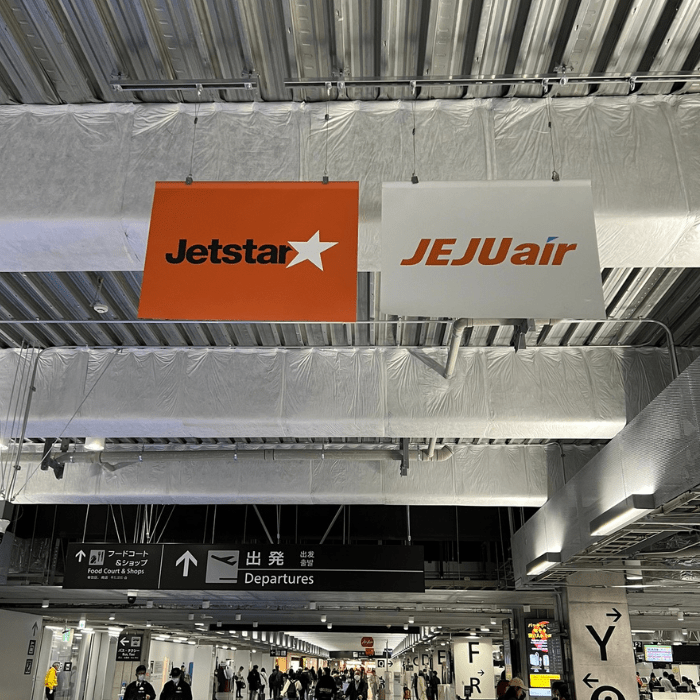
Jeju Air flies out of Terminal 3 at Narita International Airport, the terminal most low-cost carriers (like Jetstar) use. Online check-in wasn’t available for my flight — the website mentions some Japan flights are eligible, but doesn’t explain which. I arrived a bit early just in case, unsure how long check-in would take.
Jeju Air has a small service desk area at Narita; most of the terminal runs on self-serve kiosks. I used the kiosk to check in — it was smooth, no issues — and was able to select a seat for free. The selection was limited, but I still got a window seat toward the middle of the plane.
One thing most travelers on low-cost carriers worry about is how strictly carry-on rules get enforced. I’d read the horror stories on Reddit and elsewhere. Since I had a free checked bag option anyway, I decided to risk carrying my 55-liter Patagonia Black Hole bag, which technically exceeds the carry-on limit. Nobody weighed or measured it, and I didn’t see anyone else’s bag checked either — though that’s always a gamble if your bag doesn’t meet the stated requirements.
Terminal 3 at Narita is small: a food court before security, a single small coffee shop after security for international departures, and a decent spread of duty-free and drugstore options pre-security. Past security, expect vending machines and limited seating.
Cabin and Seat on Jeju Air
Boarding was a little chaotic — as soon as the gate agent started talking, everyone lined up at once, group numbers or not. I joined in. Jeju Air sells priority boarding as an add-on, but based on my experience, I’d skip it; it didn’t seem to matter in practice.
Seat pitch is 29 inches — close to the standard 30–31 inches, but noticeably tighter. I’m 5’10” and had no issues, though a taller passenger nearby looked less comfortable. No seats currently have power outlets or USB ports.
Food, Beverage, and In-Flight Entertainment
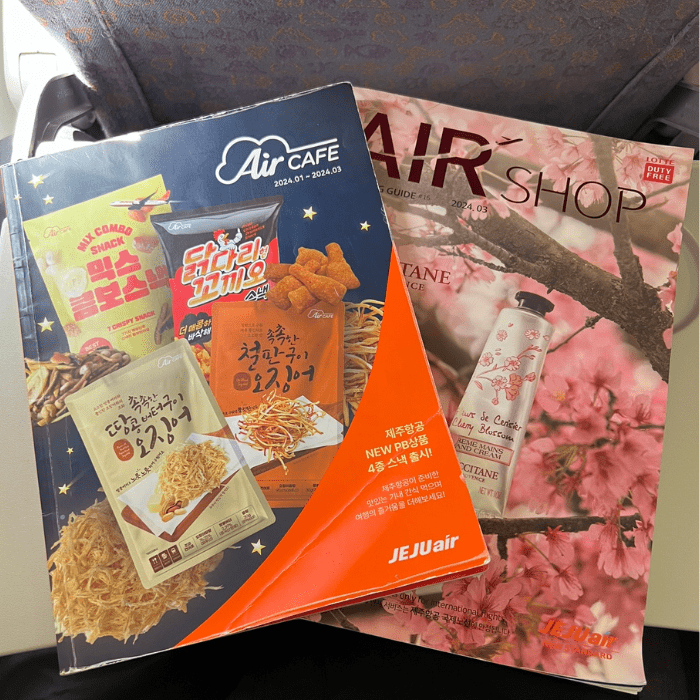
No complimentary beverage or meal is included unless your fare covers it, but both are available for purchase via the Air Cafe menu in the seatback pocket, with separate menus for domestic and international flights. I ordered a Pepsi, payable in USD, Japanese yen, or Korean won — I paid in yen given the exchange rate at the time.
There’s also an Air Shop magazine for in-flight shopping — it reminded me of SkyMall back in the day. You can order on the plane, provide a shipping address, and Jeju Air ships it to you.
No in-flight entertainment is offered, which was fine for a short-haul flight but could be more of a nuisance on something longer. Download anything you want to watch beforehand, since there’s no WiFi either.
Final Thoughts: Will I Fly Jeju Air Again?
I wasn’t sure what to expect going in, given some of the reviews I’d read beforehand, but I’m glad I booked the flight. Jeju Air doesn’t offer many amenities, but for the price, it was worth it. I could see the lack of extras being more of an issue on a long-haul flight, but for domestic or short international routes, I wouldn’t hesitate to book again.
4 Comments